


Eating slowly isn’t just about health; it’s also a beautiful Sunnah of the Prophet Muhammad (PBUH). In a world of fast food and rushed meals, this forgotten practice offers peace and blessings. When we pause to eat with mindfulness, our hearts connect with gratitude and our bodies feel the benefit. This blog uncovers the timeless wisdom in the Sunnah of eating slowly. Keep reading to discover how one simple habit can transform your life spiritually and physically.
What is the Sunnah of Eating Slowly?
The Prophet Muhammad (PBUH) ate with intention, grace, and awareness. He never rushed his meals and encouraged others to chew well and appreciate each bite. Authentic Hadiths mention that he never criticized food and often ate in silence. This slow and mindful approach reflects deep humility and gratitude. Following this Sunnah connects us to the prophetic lifestyle.
The Sunnah of eating slowly teaches balance and presence. It helps Muslims develop good manners at the table. Small bites, proper chewing, and silent eating create a peaceful environment. Eating with others, starting with Bismillah, and ending with Alhamdulillah completes this Sunnah beautifully. These habits benefit both body and soul.
Scientific Benefits of Eating Slowly
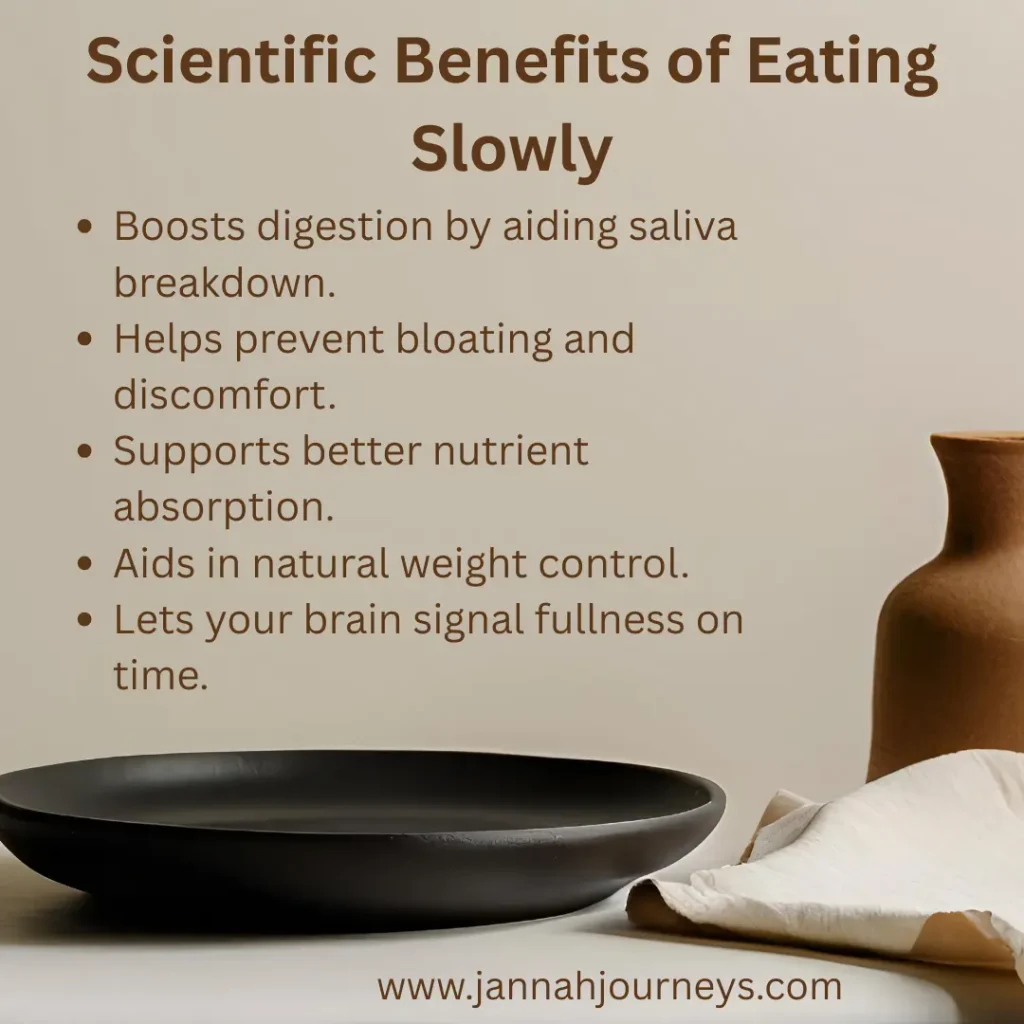
Modern science supports the Sunnah of eating slowly with strong evidence. Eating slowly improves digestion by allowing saliva to break down food properly. It also helps the stomach process nutrients with less strain. People who eat mindfully report fewer issues like bloating and indigestion. This small change supports gut health effectively.
Eating slowly can also help with weight control. When we eat fast, we often miss the body’s fullness signals. Mindful eating gives our brain time to register that we are satisfied. This reduces the risk of overeating and supports a healthy weight. It’s a natural and easy way to manage eating habits.
Mindfulness in Islam and the Act of Eating
Mindfulness or “tafakkur” is highly valued in Islam. When we eat slowly and reflect on our food, we turn a simple act into worship. The Prophet (PBUH) reminded us to think about the blessings in every meal. Being present helps us appreciate Allah’s provisions and develop gratitude. This attitude nourishes both the heart and the soul.
Avoiding distractions during meals is also part of the Sunnah. Using phones or watching TV takes us away from mindful eating. The Prophet (PBUH) ate calmly, without engaging in unnecessary talk. A focused and peaceful meal brings barakah (blessing). It also teaches us discipline and control in daily life.
Spiritual Rewards of Eating Mindfully According to Sunnah
Eating slowly and mindfully earns both worldly and spiritual rewards. The Prophet (PBUH) taught us that barakah comes with eating together, starting with Allah’s name, and finishing with praise. Eating with mindfulness deepens our connection with Allah. We recognize His mercy in every bite and thank Him sincerely. This brings contentment and peace.
Mindful eating fosters taqwa (God-consciousness). When we slow down, we control our nafs (desires) and eat with purpose. This spiritual awareness helps us avoid waste and excess. The Sunnah of eating slowly reminds us that food is a trust, not a right. It shapes our attitude toward blessings and self-discipline.
Practical Tips to Implement This Sunnah Today
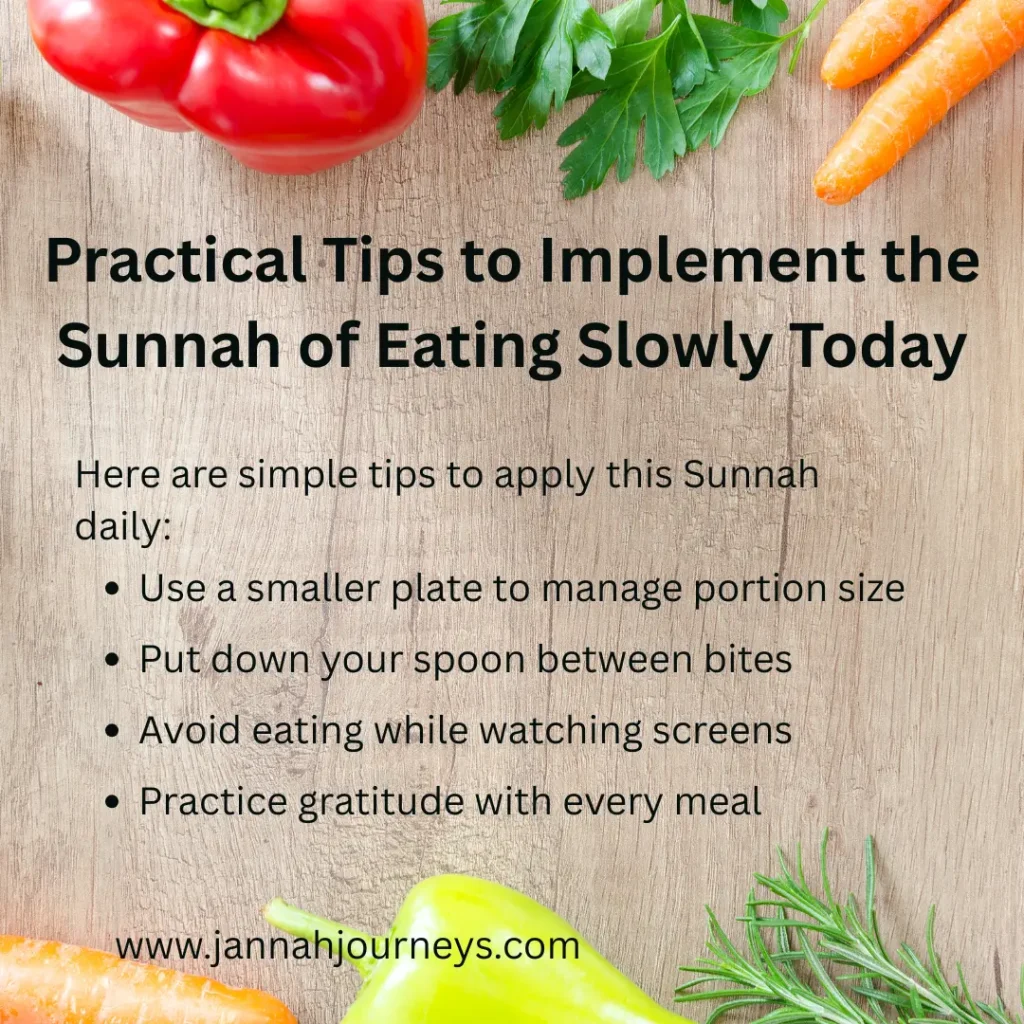
You don’t need to change your entire lifestyle to follow the Sunnah of eating slowly. Start by setting an intention before meals. Say “Bismillah” and remind yourself that you’re following the Prophet’s example. Take small bites, chew thoroughly, and enjoy the flavors. Eat in silence or with Dhikr to maintain presence.
Here are simple tips to apply this Sunnah daily:
- Use a smaller plate to manage portion size
- Put down your spoon between bites
- Avoid eating while watching screens
- Practice gratitude with every meal
- Eat with family or companions when possible
Teaching Children the Sunnah of Eating Slowly
Children learn best by watching adults. If you follow the Sunnah of eating slowly, your kids will likely adopt it too. Use simple language to explain why the Prophet (PBUH) ate this way. Share Hadiths or stories about his table manners. Make mealtimes calm and focused.
Storytelling is a powerful teaching tool. Talk about how the Prophet sat, ate, and gave thanks. Encourage kids to take small bites and avoid waste. Let them help prepare food to build respect for meals. These habits will stay with them for life.
Benefits of the Sunnah of Eating Slowly
| Spiritual Benefits | Physical Benefits |
| Brings barakah to food | Improves digestion |
| Encourages gratitude | Helps in weight control |
| Teaches self-discipline | Reduces bloating and discomfort |
| Connects us to prophetic habits | Enhances nutrient absorption |
Conclusion
The Sunnah of eating slowly is more than just a dietary tip. It’s a holistic way to live with awareness, gratitude, and respect for blessings. This practice aligns with Islamic teachings and modern health advice. It brings physical wellness and spiritual clarity together. Revive this Sunnah to transform your meals and nourish your soul.
FAQs
Q1: Is eating slowly a Sunnah or just healthy advice?
It is both. The Prophet (PBUH) practiced and encouraged eating slowly. It also has proven health benefits.
Q2: Can I follow this Sunnah in a busy schedule?
Yes, start with one mindful meal a day. Even a few slow bites can help build the habit.
Q3: How do I teach my family to eat mindfully?
Lead by example, share stories from the Sunnah, and create calm mealtimes without distractions.
Q4: Does eating slowly really improve digestion?
Yes, chewing food well helps the digestive system function better and reduces discomfort.
Q5: What if I forget and eat quickly sometimes?
It’s okay. The key is to keep trying and make it a regular Sunnah in your life.


