


Healthy eating can be simple and enjoyable when you make the right choices. What if a few small changes could bring big benefits to your energy, immunity, and well-being? That’s the power of superfoods. These are nutrient-packed foods that help your body function at its best. This guide shares the best superfoods for daily diet that are easy to include and full of health benefits.
What Makes a Food a Superfood?
Superfoods are foods rich in vitamins, minerals, and antioxidants. They help protect your body from disease and support overall health. They pack a lot of nutrition into very few calories. They also reduce inflammation and boost your immune system. This makes them a smart choice for daily eating.
Superfoods include fruits, vegetables, nuts, seeds, and some types of fish. Many are known for specific benefits like heart health, brain function, or glowing skin. Their powerful nutrients support your body naturally. You don’t need fancy meals to eat well. Just a few smart choices each day can make a big difference.
Top Health Benefits of Adding Superfoods Daily
Adding superfoods to your daily routine helps your body in many ways. They improve digestion, support brain function, and give lasting energy. Superfoods like salmon and chia seeds can also reduce the risk of heart disease. Many have fiber to help with weight control and gut health. Eating a variety keeps your body balanced.
Here are some key benefits:
- Boost immunity naturally
- Fight inflammation
- Improve skin and hair
- Help with weight loss
- Support long-term health
These benefits show why choosing the best superfoods for daily diet matters. Superfoods fuel your body without needing extra supplements. They fit into meals you already eat. Small steps lead to long-term results. Let’s look at the top 12 superfoods to add today.
12 Best Superfoods for Your Daily Diet
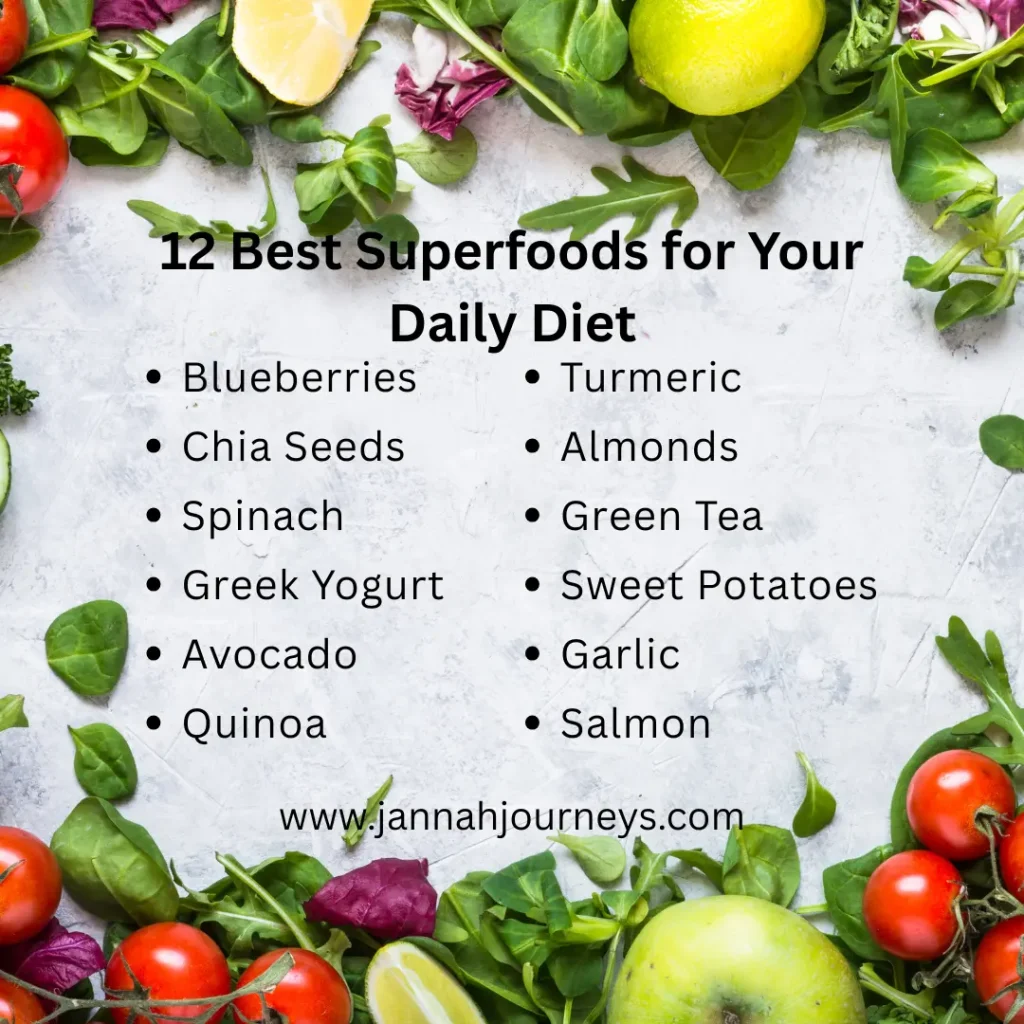
1. Blueberries – Brain-Boosting Antioxidants
Blueberries are small but mighty. Rich in antioxidants, they help shield the brain and delay signs of aging. Regular intake supports memory and mental clarity. These berries also help reduce blood pressure and cholesterol. Try adding them to smoothies or oatmeal.
You can eat blueberries fresh or frozen. They’re perfect as a snack or in a breakfast bowl. Blueberries contain vitamin C and fiber too. Just a handful each day makes a difference. They’re a sweet way to support brain health.
2. Chia Seeds – Fiber & Omega-3 Power
Chia seeds may be tiny, but they’re full of nutrients. They are rich in omega-3 fats and fiber, which support heart and gut health. ust a small amount of these seeds can help curb hunger and keep you satisfied for hours. That makes them great for weight control. Mix them into yogurt, smoothies, or puddings.
Chia seeds expand when soaked in liquid. This gives them a unique texture that works well in recipes. They’re also a plant-based protein source. One spoon daily can boost your fiber intake. Keep a jar in your pantry for quick use.
3. Spinach – Iron and Folate for Vitality
Spinach is a leafy green full of iron, folate, and vitamins. It helps prevent fatigue and supports red blood cell production. Spinach also contains antioxidants that support eye health. Eating it raw or cooked is beneficial. Add it to salads, eggs, or smoothies.
Spinach is low in calories but rich in benefits. It’s easy to include in everyday meals. Folate plays a vital role for women, particularly throughout pregnancy. Regular intake helps your body function better. This green should be a daily go-to.
4. Greek Yogurt – Probiotic-Rich Digestive Support
Greek yogurt offers a thicker consistency than the regular kind and is full of probiotics that support healthy digestion and gut function. It also provides protein and calcium. This makes it a good snack or breakfast option. Choose plain, low-fat versions for best results.
Top it with fruits or chia seeds. It works great as a foundation for creamy dips and homemade dressings. Greek yogurt keeps you full longer. Its live cultures keep your gut healthy. This superfood is both tasty and functional.
5. Avocado – Healthy Fats for Skin and Heart
Avocados offer heart-healthy monounsaturated fats. These fats lower bad cholesterol and support glowing skin. Avocados also have potassium, which balances blood pressure. Their creamy texture makes them perfect for toast or salads. A little goes a long way.
Mash it on toast or blend it into smoothies. Avocados help absorb nutrients from other foods. They also provide fiber and vitamins E, K, and B. Eating them regularly supports heart health. This fruit is both rich and nourishing.
6. Quinoa – Complete Plant-Based Protein
Packed with complete protein, quinoa provides all nine essential amino acids, making it a smart plant-based option for vegans and vegetarians alike. Free from gluten, it’s easy on the stomach and also delivers key nutrients like magnesium, fiber, and iron. Cook it like rice for bowls or salads.
Use quinoa in place of rice or pasta. It’s light but satisfying. The protein keeps you full and fuels your muscles. Quinoa is versatile and cooks fast. It’s a pantry staple you’ll use often.
7. Turmeric – Natural Inflammation Fighter
Turmeric is known for its anti-inflammatory properties. The active compound curcumin helps reduce pain and swelling. It also supports joint and heart health. Use it in teas, curries, or golden milk. A little pinch goes a long way.
Turmeric pairs well with black pepper for better absorption. It adds color and warmth to dishes. Try it in soups or roasted veggies. It’s a healing spice with ancient roots. Use it daily in small amounts.
8. Almonds – Nutrient-Dense Snack with Vitamin E
Almonds make a satisfying, crunchy snack filled with vitamin E and heart-friendly fats. They play a role in supporting brain health and cardiovascular function. Their fiber and protein content also help manage appetite and stabilize blood sugar levels. A small handful is just right for a quick energy boost during the day. Plus, they’re easy to carry and stay fresh for a long time.
Add almonds to oatmeal or trail mix. You can also use almond butter as a spread. They contain magnesium and fiber too. Almonds support muscle and bone health. Keep a small bag handy every day.
9. Green Tea – Clean Energy and Antioxidants
Green tea provides a mild energy lift thanks to its natural caffeine and delivers strong antioxidants that promote better health and overall well-being. It boosts metabolism and brain function without causing jitters. The catechins in green tea help burn fat and fight disease. Drink it hot or iced for a refreshing pick-me-up. Two to three cups daily is ideal.
You can use matcha for a stronger version. Add lemon or honey for extra taste. Green tea also supports oral and heart health. It’s a healthier alternative to sugary drinks. Include it as your go-to beverage.
10. Sweet Potatoes – Gut and Eye Health
Sweet potatoes are rich in beta-carotene and fiber. They support vision and digestive health. These colorful tubers are also a good source of vitamin C and potassium. Bake, roast, or mash them for a tasty side. They keep you full and energized.
Their natural sweetness makes them kid-friendly too. Use them in soups or stews. They help balance blood sugar levels. Sweet potatoes are both comforting and nutritious. Keep them on your weekly grocery list.
11. Garlic – Immune Support and Heart Health
Garlic is a natural antibiotic that boosts immunity. It lowers blood pressure and cholesterol. Its compounds help the body fight infection. Raw garlic is most powerful, but cooked still helps. Add it to sauces, stir-fries, or roasted dishes.
Garlic adds bold flavor to meals. It supports detox and gut health. Regular use can reduce cold and flu risk. One clove a day is enough. This kitchen staple has healing power.
12. Salmon – Omega-3s for Brain and Body
Salmon ranks high among foods rich in omega-3 fatty acids, which are essential for heart and brain health. These fats improve brain health and reduce inflammation. Salmon is also high in protein and vitamin D. Eat it grilled, baked, or in salads. Choose wild-caught for the best benefits.
Try salmon once or twice a week. Pair it with veggies or quinoa. It supports joint, heart, and skin health. Salmon is a complete, nourishing meal. It’s a smart choice for long-term wellness.
Easy Ways to Add Superfoods to Your Meals

You don’t need a fancy plan to eat well. Try these easy ideas:
- Add berries or chia seeds to smoothies
- Top toast with avocado or almond butter
- Mix quinoa into salads or bowls
- Use turmeric in soups or teas
- Swap sugary snacks for Greek yogurt
Begin by adding one or two superfoods to your meals, then gradually include more as part of your routine. Rotate them for variety and balance. Keep them visible in your kitchen. Prep in batches for easy meals. Eating smart can be simple and tasty.
Superfood Benefits Table
| Superfood | Key Benefit | How to Use |
| Blueberries | Brain support | Smoothies, snacks |
| Chia Seeds | Gut health, satiety | Puddings, yogurt |
| Spinach | Energy, blood health | Salads, sautéed |
| Greek Yogurt | Digestion, protein | Bowls, smoothies |
| Avocado | Skin, heart health | Toast, salad |
| Quinoa | Protein, muscle fuel | Bowls, stir-fries |
| Turmeric | Inflammation relief | Tea, soups |
| Almonds | Brain function, vitamin E | Snacks, baking |
| Green Tea | Fat burning, alertness | Hot/cold drink |
| Sweet Potatoes | Vision, gut health | Baked, mashed |
| Garlic | Immunity, heart health | Cooking base |
| Salmon | Omega-3, mental focus | Grilled, baked |
FAQs About Superfoods
Q1: Can I eat all 12 superfoods every day?
Not all at once, but rotating them through the week is ideal.
Q2: Are superfoods expensive?
Some can be, but most like spinach, garlic, and sweet potatoes are affordable.
Q3: Can kids eat superfoods too?
Yes, just adjust portions and avoid choking hazards like whole nuts.
Q4: Are superfoods better raw or cooked?
Both have benefits. For example, raw garlic and cooked spinach are both healthy.
Q5: How long before I see results from eating superfoods?
With regular use, many individuals notice improvements in their well-being within just a few weeks.
Final Thoughts: Start Small, Stay Consistent
The best way to eat better is to start small. Pick two or three superfoods you enjoy and add them into your meals. You’ll notice more energy, better digestion, and even improved skin. These best superfoods for daily diet aren’t trends—they’re timeless tools for health. Stay consistent and your body will thank you.
Which superfood will you try first today? Feel free to drop your questions or let us know your top picks in the comments section!


